Team Leadership: 2nd Pillar of Excellence
Communication and Presentation
Communication is the lifeblood of leadership. Almost every moment of our work and pleasure activities involves some type of communication. Subscribers to the Harvard Business Review rated “the ability to communicate” the most important factor in making an executive “promotable” – more important than ambition, education, and capacity for hard work. One twenty-year study that followed the progress of Stanford University M.B.A.’s revealed that the most successful graduates were also excellent communicators. The importance of communication becomes even more accentuated when we consider 85% of all job failures are due to communication conflicts, not to a lack of technical skills. – Forte Communication Survey
In this program we will further enhance our EI skills through regular feedback, coaching and practice, practice and practice! IQ gets you the job, but EI gets you promoted.
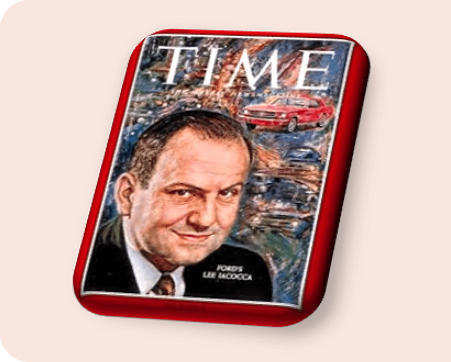
One of the best business speakers, Lee Iacocca, who saved the Chrysler Corporation, attributes his success to speaking. In his autobiography, he writes: “I’ve seen a lot of guys who are smarter than I am and a lot who know more about cars. And yet I’ve lost them in the smoke. Why? Because I’m tough? No … You’ve got to know how to talk to them, plain and simple.”
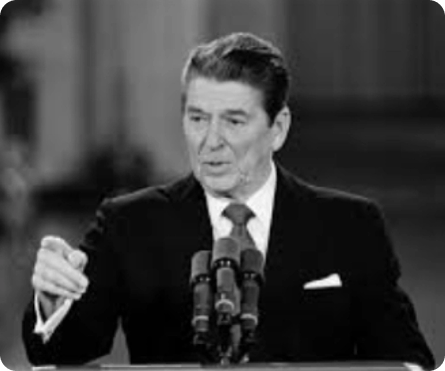
Ronald Reagan, the late president of the United States, came to the attention of his party after the very first speech he made at the Republican national party convention in 1976. He was such a dynamic speaker. So, if you can organize your speech for greater clarity and purpose, and present your ideas with conviction, control and poise, the more you will be called upon to represent your team and, thereby, rise to a leadership position.
A vital part of communication is also to listen effectively and ask the right questions. Unfortunately, the majority of us never learned these skills in our schooling system.
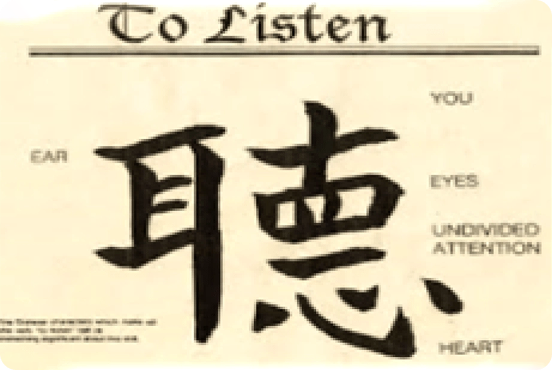
The Chinese characters that make up the verb “To Listen” tell us something significant about this skill – ears, eyes, heart and soul all should be involved in listening.
Communication experts tell us that listening and questioning complement each other. Many times, one has to first listen to ask the right questions.
- Overcome objections
- Get cooperation
- Show that you care
- Reduce anxiety
- Defuse volatile situations
- Gain control in risky situations
- Open lines of communication
- Gain information
- Persuade people
- Stimulate thinking
- Clear up confusion
- Motivate employees
- Solve problems
- Soften criticism
- Reduce mistakes
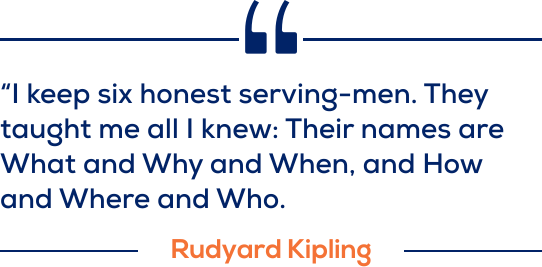
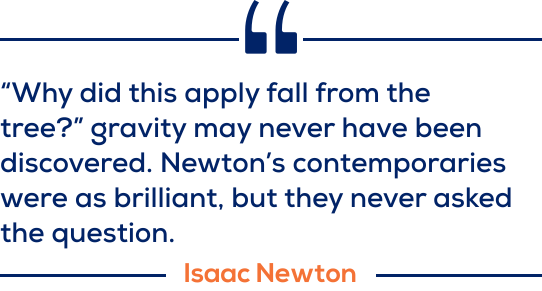
So, a leader must learn to ask the right questions. You will find leadership hidden in questioning! But we are not done with communication yet! We also need to understand the importance of business writing.
The power of business writing is immense. No matter how good one’s idea, it will not see the light of day unless it is first put in writing for the decision makers to review. This is the reason why the phrase, Okay, send me a proposal, is so commonly heard in a corporate environment. Therefore, your ability to organize and present your ideas in a coherent, meaningful written format will impact your effectiveness in getting a positive and a timely response. Even if you are not the one writing the proposal, as a leader you still need to understand the importance of format and the use of choice words to provide direction to the writer for high impact communication.
Throughout the ages pen has
remained mightier than the sword!
We Are Still Not Done With Communication Yet!
Time for Etiquette and Mannerisms
An executive search firm was hired by a company to find a top-level manager. After several weeks of interviews by a panel of experts, the list had narrowed to three candidates. As the final test, each candidate was invited to dine in a well-known restaurant. One candidate was particularly favored until disaster struck.
He slurped his soup. He took a large bite of food and kept talking. And, as he cleared his plate, he used his thumb to push the remaining peas onto his fork. The interviewers looked on in horror. They decided to drop him from the final list. Their reason? Sloppy table manners.
Table manners, body posture, walk, gestures, facial expressions, handshake, the sound of one’s laughter, the way one dresses and conducts oneself lays the foundation of one’s personality. People are automatically drawn to those with a pleasing personality and repelled by those with distasteful manners. To be a leader you better have your etiquette and mannerisms in place!
Managing Change Transition
There was more information produced in the 30 years between 1965 and 1995 than was produced in the entire 5000-year period from 3000 B.C. to 1965. Word has it that the amount of information in the world is doubling every five years – far more knowledge, reaching far more people, far faster than ever before. Bottom line? Be ready for accelerated change because life is not going to get any easier. As a leader you must keep your eyes on the horizon and anticipate change, and more importantly, have the skillset to LEAD change. Otherwise, be prepared to become extinct like the dinosaurs who failed to adapt to their changing environment.

Time Management
Problem Solving and Decision Making
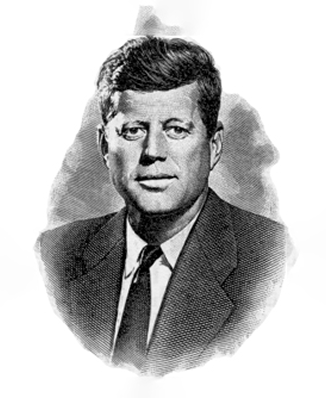
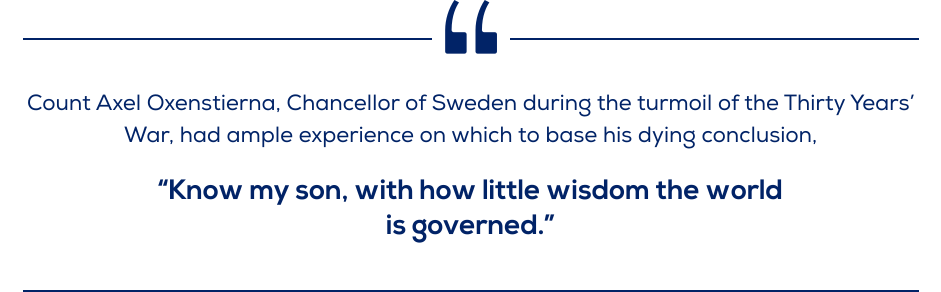
“How could we have been so stupid?” demanded John F. Kennedy after his administration’s invasion of Cuba had been soundly defeated at the Bay of Pigs. Former Yale University psychologist, Irving Janis, notes that the planners of this operation included some of the smartest people in America, and so they did not fail because they were stupid. They failed because they followed a poor process in arriving at their decision. To make sound decisions on a consistent basis one needs to combine a structured problem solving and decision-making process with the flexibility to think outside the box, seeing new possibilities, making connections and developing new ideas to implement innovative solutions.
- Why did the Trojan rulers drag that suspicious-looking wooden horse inside their walls despite every reason to suspect a Greek trick?
- Why did successive ministries of George III insist on coercing rather than conciliating the American colonies though repeatedly advised by many counselors that the harm done will be greater than any possible gain?
- Why did Charles XII and Napoleon and successively Hitler invade Russia despite the disaster incurred by each predecessor?
- Why did Montezuma, master of fierce and eager armies and of a city of 300,000, succumb passively to a party of several hundred alien invaders even after they had shown themselves all too obviously human beings, not gods?
- Why did Chiang Kai-shek refuse to heed any voice of reform or alarm until he woke up to find his country had slid from under him?
- Mao Tse-tung’s Great Leap Forward, with a steel plant in every backyard, and Cultural Revolution were also exercises in unwisdom that greatly damaged China’s progress and stability.
Conflict Resolution and Negotiation
Conflict is a natural consequence of human interactions. It tends to happen naturally when two parties have competing interests, especially in organizations which are departmentalized and segmented to increase control and effectiveness. However, the way we manage conflicts has a bearing on our personal and professional relationships. So leaders need to stay centered when facing conflicts, and know which conflict resolution style to use in a given situation – avoiding, competing, collaborating, accommodating, and compromising – to turn differences into a win-win situation.
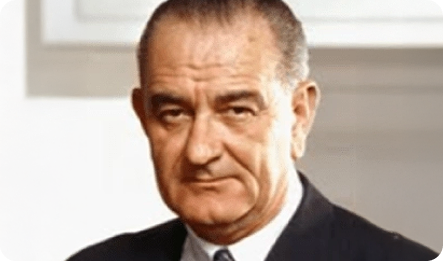
U.S. President, Lyndon Johnson, is fondly remembered for getting many bills passed in a divided American Congress. He got a lot done because he had mastered the fine art of negotiation!
Meeting Facilitation
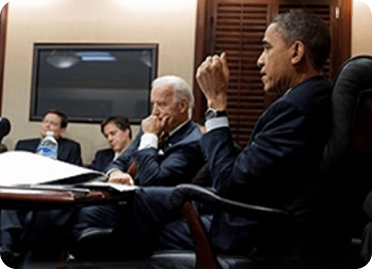
Over 60% of a leader’s time is spent preparing for, conducting and following up on meetings. Meeting facilitation is both an art and a science, which can be learned through practice and knowledge of facilitation tools and techniques. How a leader conducts and facilitates meetings may very well spell the difference between the success and failure of an endeavor. Many meetings have gone awry because the team leader could not engage participants in a focused discussion. The following example perhaps is best illustrative of why even a U.S. President needs facilitation skills to get the job done!
Also, we are all too frequently involved in everyday negotiations both in formal and informal settings. Yet only few of us have mastered this fine art. As a leader, one needs to develop a skillset to effectively use the many tools and techniques used in the negotiation process. The mark of a true negotiator is when the opponent leaves thinking he got the upper hand!
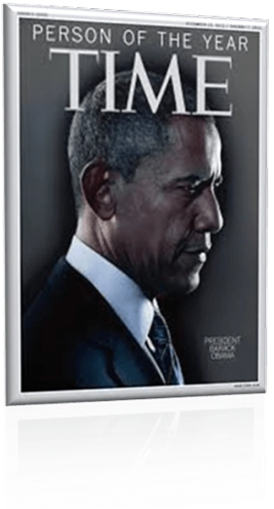
Newsweek Article: Secrets From Inside the Obama War Room
“The only way we’ll consider this is if we get the troops in and out in a shorter time frame,” Obama said.
If you can’t do the things you say you can in 18 months, then no one is going to suggest we stay, right?”
The president then encapsulated the new policy: in quickly, out quickly, focus on Al Qaeda, and build the Afghan Army. I’m not asking you to change what you believe, but if you don’t agree with me that we can execute this, say so now,” he said.
Obama wanted to make sure General Petraeus was crystal clear on the project timeline.
To avoid leaving any room for misinterpretation, Obama questioned if the participants understood his expectations.
At the end of the meeting, Obama once again summarized the new policy, and then questioned the participants if they had any reservations. This was to ensure that any disagreements were addressed in the meeting and that there was a consensus in the team.
As a facilitator, Obama used assertive communication skills in his dialogue with the meeting participants. He kept the discussion on track by paraphrasing and summarizing the main points and continued to listen and question the participants for clarity of purpose. For additional details on how Obama conducted the entire meeting session, please refer to the full-length article.
Given the history of racial discrimination in U.S., a black man could not have risen to the highest office in the country without having the skillset to lead focused discussions and establish a track record of his accomplishments. This only speaks to the importance of facilitation skills. In the end, leaders are held responsible for making things happen, which makes it all the more critical for them to know how to facilitate result-oriented discussions and meetings.
Influencing Skills
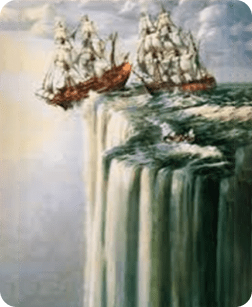
Imagine you are a passenger on this ship, and from your vantage point you come to know hours in advance that the ship will fall over the cliff; how will you convince the captain to chart a different course without formal authority? Once you understand how the influencing process works, you will realize that you have many options – rational persuasion, exchange, coalitions, ingratiation, upward appeals, consultation and pressure. Your expertise, however, will be put to the test in how you make use of these techniques in effecting the thoughts and behavior of the targeted individual because at times you may not have the formal authority to command and control.
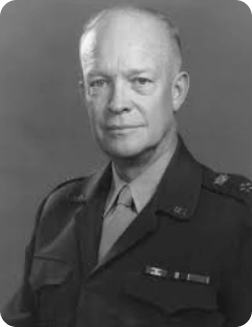
When General Eisenhower became the President of the U.S., he realized that the command-and-control style he so successfully used in the army had no place in bureaucracy. He had to learn how to influence the congressmen to get the job done!
As a facilitator, Obama used assertive communication skills in his dialogue with the meeting participants. He kept the discussion on track by paraphrasing and summarizing the main points and continued to listen and question the participants for clarity of purpose. For additional details on how Obama conducted the entire meeting session, please refer to the full-length article.
Managing Team Dynamics
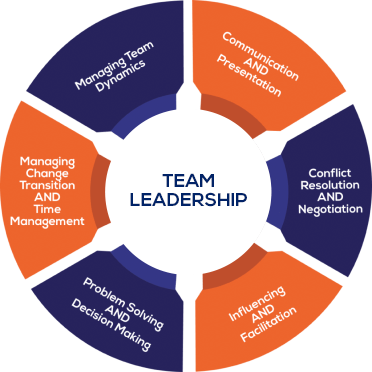
Research shows that success in accomplishing a significant endeavor is attributed to 15% technical knowledge and 85% people skills. Now that you have developed the skillset of team leadership – communication, presentation, conflict resolution, negotiation, facilitation, influencing, questioning, listening, problem solving, decision making, and change management – you will be able to leverage the knowledge, skills and experience of others to accomplish the project goals. Managing team dynamics requires a leader to work with different behavioral styles, and address team building challenges during its different phases of formation – Forming, Storming, Norming, Performing, and Adjourning. Leadership is about leading people, and this is one skill you cannot do without.
Stages of Team Development
Forming
Team members cautiously familiarize themselves with the project’s objectives, the project manager, and with each other.
Storming
Control, power and influence issues emerge as project work begins.
Norming
Team members have resolved issues in the storming phase and established cooperative and productive work practices.
Performing
The team functions in a highly productive and interdependent manner.
Adjourning
To manage team dynamics, a leader needs the skillset to address the team building challenges as they appear during its different phases of development! Each phase presents its own unique challenges.